

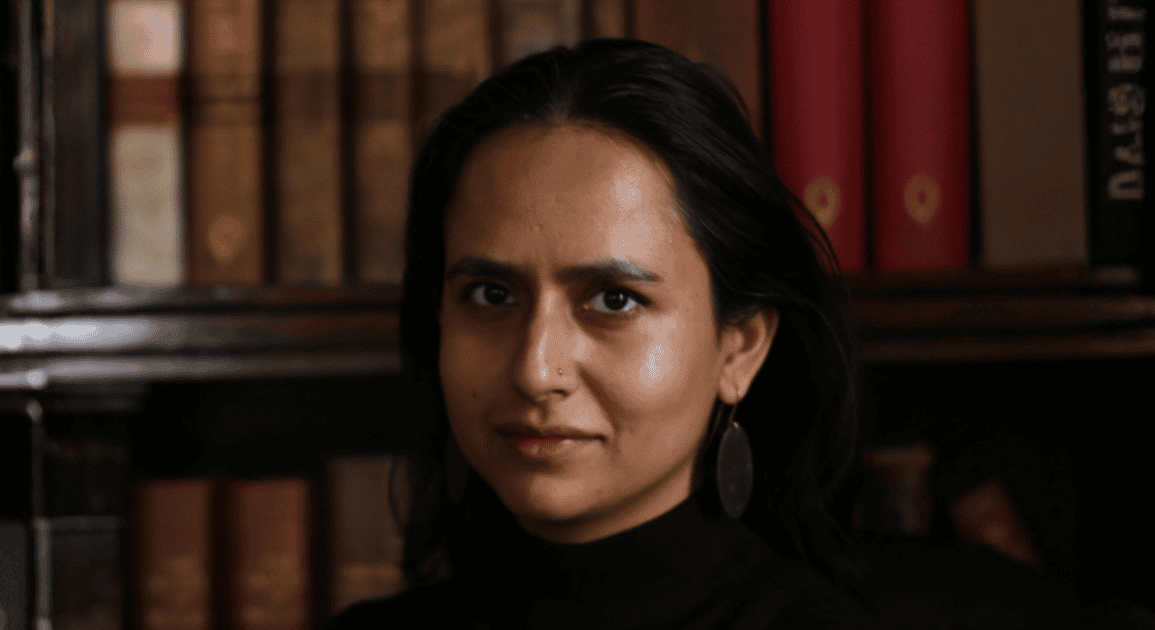
Hope is at the centre of Bhawna Jaimini’s work with marginalised communities in India. For her, rebuilding after a crisis is about much more than restoring buildings and infrastructure. It is also about healing, bringing people together and creating spaces where communities can thrive.
At Building Green CPH on 28–29 October, Bhawna Jaimini, founder of Centre for Urban Commons, joins the debate “Rebuilding hope through culture and collaboration”. We spoke with her about hope, public spaces and the role of culture and community in rebuilding.
What does this year’s theme, “Navigating Uncertainty – Hope Through Action”, mean to you and your work?
– Needless to say, our futures never looked so uncertain as they do today because of wars, the climate crisis and the threat of AI infringement across all parts of our lives. As a practitioner, I often feel powerless, hopeless and cynical about the state of the world and whether anything I do even matters. However, giving in to hopelessness is an act of privilege, and sometimes communities who have the most to lose have nothing but hope. I keep hope at the centre of my practice, and keep reminding myself that losing hope for a better world means accepting defeat at the hands of everything that is trying to destroy this world for momentary profits.
Where do you see the greatest opportunities to act differently precisely because the world and the industry have become more uncertain?
– Though my own practice is with the marginalized communities in India, I strongly feel that we need to intervene more on the top – the big polluters, industries, tech companies – people who are driving the uncertainty. It’s them who need to be made answerable and forced to act in favour of humanity and the planet at large. What we must do at the ground level is to create spaces and opportunities for people to organise and come together. In India, where I work, our cities are becoming heavily privatised, and the public spaces are shrinking at an exponential pace. This is breaking communities and preventing people from coming together. A private garden can never replace a public park. Buying books from Amazon can never replace borrowing from a public library. Public spaces are not just service providers; they are at the centre of what kind of communities we are building.
What role can culture and community play when an area needs to be rebuilt after a crisis?
– Any crisis, whether it is a climate-related disaster or a war tragedy, strikes not just at the physical infrastructure, but it breaks people’s hearts in the most devastating ways. Any rebuilding effort has to begin by understanding that buildings will be reconstructed sooner or later, but it’s the mending and healing of the hearts of people who lose their loved ones and their dreams that takes time. Keeping culture and community at the centre of any rebuilding process allows us to do that.
What is the most important point you would like to bring to the debate “Rebuilding hope through culture and collaboration”?
– I would like to say that sometimes rebuilding doesn’t require bricks and concrete at all. It requires a commitment to not just replace what was lost, but to shed the baggage of the past and create value focused on the world we would like to live in. The world that is not obsessed with growth but with kindness. The world where we share more and hoard less.
Rebuilding hope through culture and collaboration at Building Green CPH
At Building Green CPH on 28–29 October at Lokomotivværkstedet in Copenhagen, the Royal Danish Academy facilitates the debate “Rebuilding hope through culture and collaboration”.
The debate explores how communities can rebuild during times of crisis, the role of culture, art and collaboration, and why the rebuilding process can be just as important as the physical result. Drawing on experiences from India, Denmark and Ukraine, the panellists discuss how local communities can help create hope and new possibilities for the future.
