

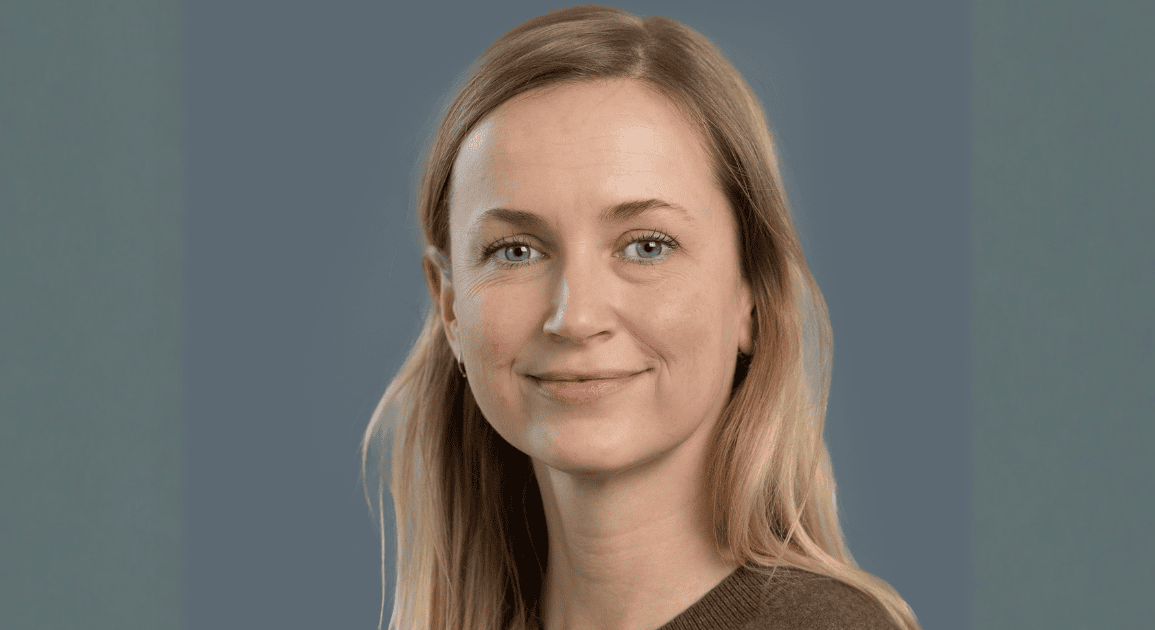
For Ingeborg Hau, hope is central to building sustainable communities. As editor and curator at the Royal Danish Academy, she is interested in how culture, collaboration and local communities can play a role in rebuilding after crises, and why rebuilding must go beyond physical structures.
At Building Green CPH on 28–29 October, Ingeborg Hau moderates the debate “Rebuilding hope through culture and collaboration”, bringing together perspectives from India, Denmark and Ukraine.
What does this year’s theme, “Navigating Uncertainty – Hope Through Action”, mean to you and your work?
– When I first saw this year’s theme, I thought about how different it would read depending on who you are, where you live and what you are working with. For me, the idea of Hope is central to the development of sustainable communities. Hope is what make people come together, in my experience.
Where do you see the greatest opportunities to act differently precisely because the world and the industry have become more uncertain?
– I guess navigating uncertainty will at some point force us to act differently, though we in our part of the world to a large extend seem to keep acting as if nothing has changed. The uncertainty we face in terms of climate change, geopolitics, and rising inequality – to name a few – demonstrate that our current way of navigating is falling short.
What does it take to turn hope into concrete action?
– Not much. Depends on what we consider concrete action – inviting someone for coffee, asking someone a genuine question, reaching out to someone can be very concrete, powerful and productive actions. The speakers we have in this session all embody hope through action and prove that anyone can make enormous positive change with very limited resources and support.
What role can culture and community play when an area needs to be rebuilt after a crisis?
– When somewhere needs rebuilding, community means almost everything. Local culture, common identity and togetherness are superpowers when it comes to rebuilding our communities, regardless of the reason they need rebuilding.
It’s not only physical structures that are damaged in times of war, disaster and crises. By insisting on locally anchored rebuilding processes, communities can rebuild and strengthen physical as well as social and cultural structures and systems – and hope! – at the same time.
What is the most important point you would like to bring to the debate “Rebuilding hope through culture and collaboration”?
– We’re at a green building fair and we tend to talk a lot about green materials, reduced climate footprint and innovative construction. Our point is that rebuilding is about more than the physical built environment. All (re)building has to have a purpose. It doesn’t matter how much we reduce our resource use and climate footprint if what we (re)build doesn’t meet the needs of the people we are working for.
What do you hope the participants will take away from the debate?
– A stronger belief in culture, arts, collaboration and community.
Rebuilding hope through culture and collaboration at Building Green CPH
At Building Green CPH on 28–29 October at Lokomotivværkstedet in Copenhagen, the Royal Danish Academy facilitates the debate “Rebuilding hope through culture and collaboration”.
The debate explores how communities can rebuild during times of crisis, the role of culture, art and collaboration, and why the rebuilding process can be just as important as the physical result. Drawing on experiences from India, Denmark and Ukraine, the panellists discuss how local communities can help create hope and new possibilities for the future.
